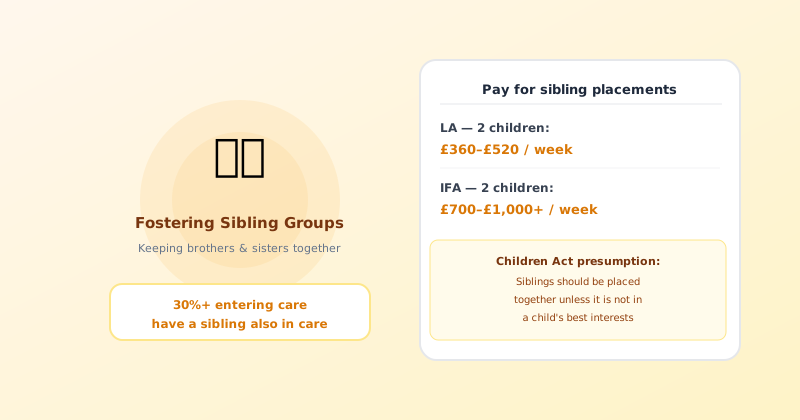
- Over 30% of children entering care have a sibling also in care
- Keeping siblings together is a legal presumption under the Children Act
- Carers willing to take 2+ children are critically short - and paid accordingly
- IFA rates for two siblings: £700-£1,000+/week total
When children are removed from their families, they often lose everything: their home, their parents, their school, their neighbourhood. If they also lose their brothers and sisters, the loss is compounded in ways that research consistently links to worse long-term outcomes.
The Legal Position
The Children Act 1989 creates a presumption that siblings should be placed together unless it is not in one or more of the children's best interests to do so. In practice, the shortage of foster carers willing and able to take sibling groups means that many siblings are separated - a failure of capacity, not intent.
Practical Considerations
- Space: Children of different genders over a certain age usually need separate rooms.
- Age range: Sibling groups often span a wide range. You may be caring for a 4-year-old and a 14-year-old simultaneously.
- Sibling dynamics: In traumatised families, children often take on parentified or scapegoated roles. Understanding family dynamics is part of the task.
Pay for Sibling Groups
You receive an allowance for each child individually. For a sibling group of two: LA approx £360-£520/week total; IFA approx £700-£1,000+/week total. Some agencies pay a co-placement premium for carers committed to sibling placements.
Frequently Asked Questions
How many bedrooms do I need for a sibling placement?
This depends on the ages and genders of the children. Two children under 10 of the same gender can often share a room. Older children or different genders typically need separate rooms.
Can I specify that I only want sibling placements?
You can express a preference during your assessment. Sibling-specific approval is common and respected.
What happens if one sibling needs to leave but not the other?
This happens - for example if one child is adopted. Your supervising social worker will support you through this process, which can be emotionally complex for everyone involved.