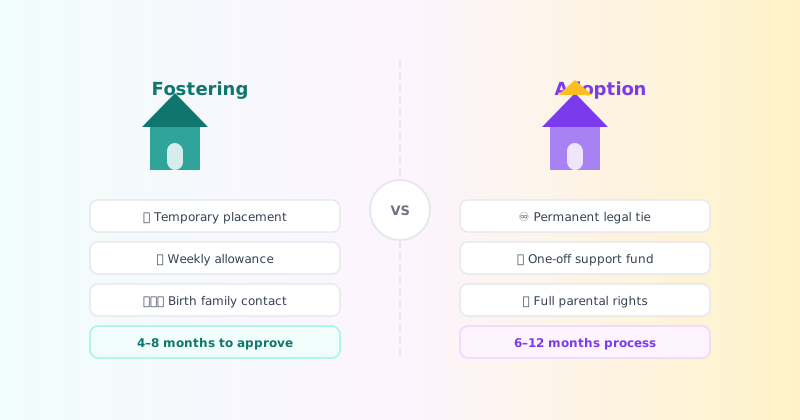
Deciding to care for a child is a life-changing decision. But often, people aren't sure whether fostering or adoption is the right path for them. While both involve caring for a child who cannot live with their birth family, they are fundamentally different in terms of legal status, duration, and the role you play.
The core difference
The simplest way to understand the difference is this:
- Adoption is a legal process where you become the child's permanent, legal parent. All legal ties to the birth family are severed.
- Fostering is usually temporary (though it can be long-term). You care for the child on behalf of the local authority, who shares legal responsibility with the birth parents.
Fostering is about caring for a child while others make the major decisions. Adoption is about becoming their parent forever.
Legal Responsibility
In Adoption: Once the Adoption Order is granted by the court, you have full parental responsibility. You make all decisions — from which school they attend to medical treatment and holidays — just as you would for a biological child. Social services are no longer involved.
In Fostering: The local authority (and usually the birth parents) retain parental responsibility. You are part of a team. You make day-to-day decisions (like bedtime or meals), but major decisions (like surgery, changing schools, or holidays abroad) usually require permission from the social worker.
Duration and Permanence
Adoption is permanent. The child is a member of your family for life, legally and emotionally. They take your surname and have the same inheritance rights as biological children.
Fostering varies.
- Short-term fostering can last a few days or up to 2 years while plans are made.
- Long-term fostering can last until the child is 18 (or 21 with "Staying Put").
Even in long-term fostering, the arrangement is legally comprised of a series of placements. While the aim is stability, it does not carry the same absolute legal permanence as adoption.
Financial Support
This is a major practical difference.
Foster Carers receive a weekly allowance to cover the child's costs, plus (in most cases) a professional fee for their time and work. Fostering creates an income stream, and for many, it is a career.
Adoptive Parents are expected to support the child financially, just as they would a birth child. You do not receive a weekly allowance or fee. (Note: In some cases, a means-tested Adoption Support Fund is available for therapeutic needs, but it is not an income).
Contact with Birth Family
Fostering: Promoting contact (now called "family time") is a key part of a foster carer's role. Most foster children see their birth parents regularly, supervised or unsupervised. You play a vital role in supporting this.
Adoption: Contact is usually indirect (e.g., "letterbox contact" once or twice a year). Direct contact is rare, though becoming slightly more common in modern open adoptions.
Which is right for you?
Choose Adoption if:
- You want to build your family and become a parent in every sense.
- You want full autonomy to raise a child without social worker interference.
- You are financially secure enough to raise a child without an allowance.
- You are prepared for a lifelong commitment.
Choose Fostering if:
- You want to help vulnerable children but don't necessarily need to be "Mum" or "Dad".
- You value being part of a professional team.
- You need the financial support of allowances and fees.
- You are good at working in partnership with birth families and professionals.
Next steps
Still undecided? The best way to clarify your feelings is to learn more about the reality of fostering.
- Read about the assessment process
- Understand long-term vs short-term fostering
- Take the free training course to see if the role fits you