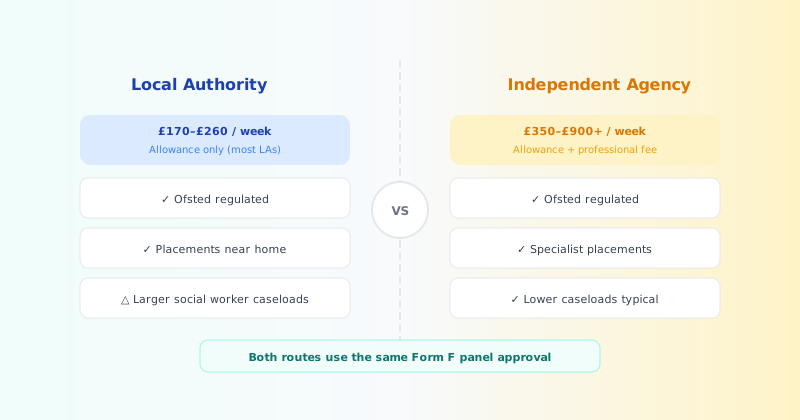
Local authorities (LAs) pay allowances only (typically £170–£260/wk). Independent fostering agencies (IFAs) pay an allowance plus a professional fee (typically £350–£650+/wk total). Both routes lead to the same panel approval process.
What Is a Local Authority Fostering Service?
Every council in England, Wales, Scotland, and Northern Ireland runs its own fostering service. These are publicly funded, Ofsted-regulated (in England), and directly linked to the council's children's services department. When a child is taken into care by social services, the local authority is responsible for finding them a placement — often within their own fostering pool first.
What Is an Independent Fostering Agency?
IFAs are private or voluntary sector organisations that recruit, train, support and manage foster carers. They work under contract with local authorities — when an LA cannot find a placement from their own carers, they commission an IFA. There are over 1,200 IFAs registered in England, ranging from small local organisations to national players.
How Pay Compares
Allowance only: £170–£260/wk
No professional fee in most LAs
Some pay a 'skills payment' for experienced carers
Allowance + fee: £350–£500/wk
Experienced/specialist: £500–£900+/wk
Retainer between placements (some IFAs)
Support — The Real Difference
Pay gets the headlines, but support is often the deciding factor for long-term foster carers.
- Local authorities — your supervising social worker may carry a large caseload. Support can be inconsistent. Bureaucracy can be heavy.
- IFAs — typically lower caseloads per social worker, 24/7 on-call support, more structured continuing professional development, and dedicated placement teams.
Neither is universally better — it depends entirely on the individual LA or IFA. Ofsted ratings are your best guide.
Types of Placements
- Local authorities place all types — emergency, short-term, long-term, respite, parent-and-child
- IFAs often specialise — you may join an IFA specifically because they focus on teenagers, UASC, therapeutic placements, or sibling groups
How to Choose
Ask yourself these five questions:
- Do I need fostering income to be my main or sole income? → IFA likely better
- Do I want to keep placements local and within my community? → LA often better
- Am I interested in a specialist type of fostering? → Research IFAs who specialise in that area
- How important is intensive, consistent support to me? → Check Ofsted ratings for both
- Do I want to stay with the same agency long-term? → Ask about their retention rates
Can You Switch Later?
Yes. Foster carers transfer between agencies and between LAs and IFAs regularly. You keep your foster carer status. You may need a short update assessment, but you do not redo the full Form F. Our guide on transferring fostering agencies covers the process in detail.
The Myth: "IFAs Are Profit-Driven and Worse for Children"
This is a common misconception in the sector. Ofsted data shows no significant quality difference between LA and IFA foster placements on average. Some of the best-supported, most experienced foster carers in the UK work for IFAs. Regulation, training standards, and panel processes are the same for both.
Quick Comparison Table
| Local Authority | IFA | |
|---|---|---|
| Weekly pay (approx) | £170–£260 | £350–£900+ |
| Professional fee | Rare | Standard |
| Retainer between placements | Uncommon | Some IFAs offer this |
| Ofsted regulated | Yes | Yes |
| Support social worker ratio | Higher caseloads typical | Lower caseloads typical |
| Specialisms available | All types | Often specialist |