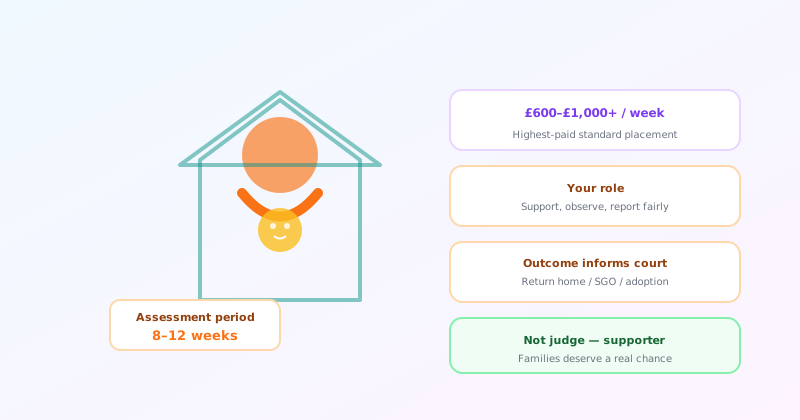
Parent and child (P&C) fostering involves a parent — usually a mother with a newborn or young baby — moving into your home alongside their child. You observe, support, and help assess their parenting over a set period, usually 8–12 weeks. It is the highest-paid common fostering type, with many placements paying £600–£1,000+/week.
What Is Parent and Child Fostering?
When a court or local authority has concerns about whether a parent can safely care for their child, they may order a parenting assessment. Rather than separating the family immediately, the parent and child are placed together with a specially trained foster carer. The foster carer provides a supported home environment where parenting can be observed and developed over time.
The assessment — usually 8–12 weeks — informs the court's decision about the child's future. The outcome may be:
- Return home with support
- Placement with extended family (kinship care)
- Adoption or long-term foster care
Who Are the Parents?
Parents in P&C placements are often young, first-time mothers facing multiple vulnerabilities: domestic violence history, mental health difficulties, substance misuse recovery, learning disabilities, or simply a lack of any stable parenting role model themselves. They are not bad people — they are people who need support to demonstrate whether they can parent safely.
The majority are female. Male parents can also be assessed, though this is less common. Occasionally both parents are assessed together.
What Is the Foster Carer's Role?
You are not the parent's therapist, judge, or adversary. Your role is to:
- Provide a warm, stable home for both parent and child
- Model and teach practical parenting skills (feeding, bathing, routines)
- Observe interactions and record them accurately and fairly
- Provide feedback in a supportive, non-judgemental way
- Flag safeguarding concerns immediately to the social worker
- Work as part of a professional team — you are not making the decisions alone
"Parent and child fostering is not about catching people out. It's about giving families a real chance — with a proper safety net underneath them."
Skills You Need
P&C fostering is among the most demanding types because you are managing two very different relationships simultaneously: with a vulnerable adult and with a baby or young child. You need:
- Experience caring for infants or very young children
- Emotional maturity and the ability to remain non-judgemental
- Strong safeguarding awareness
- Ability to write detailed, accurate, fair daily records
- Resilience — the eventual outcome may be painful for the parent and for you
How Much Does It Pay?
P&C placements are the highest-paid in standard fostering, reflecting the intensity of support required:
- IFA placement: typically £600–£1,000+/week
- Local authority: typically £350–£600/week
- Some agencies pay separate assessor allowances on top
Note: you are caring for two people (the parent counts as a separate placement in some arrangements). Income tax implications are the same as standard fostering — most carers pay little or no tax under Qualifying Care Relief.
How to Become a Parent and Child Foster Carer
- Complete standard foster carer approval first
- Gain experience with babies and/or young children
- Complete specialist P&C fostering training (your agency provides this)
- Express interest in P&C referrals to your placement team
Some IFAs recruit specifically for P&C. If this is your primary interest, tell agencies at the enquiry stage and choose one with an active P&C programme.