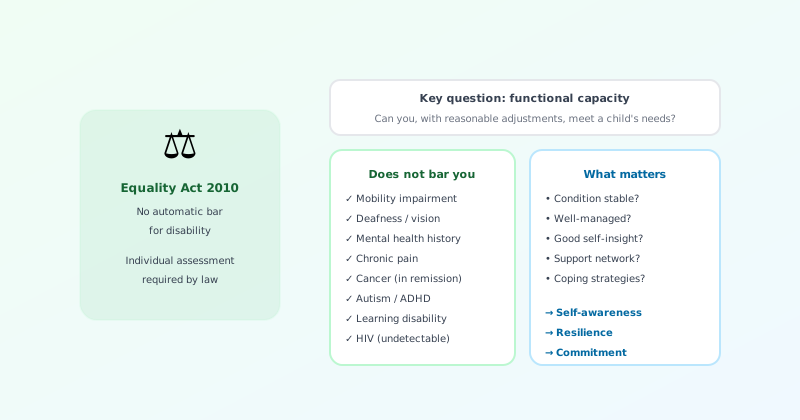
There is no list of conditions that automatically bar you from fostering. Agencies assess your functional capacity — can you, with any reasonable adjustments, meet the needs of a fostered child? Many people with significant health conditions foster successfully.
The Legal Framework
Under the Equality Act 2010, fostering agencies cannot refuse to assess someone solely because they have a disability. They must conduct an individual assessment of how any health condition or disability would affect your ability to foster — and consider whether reasonable adjustments could be made.
This doesn't mean everyone will be approved — it means everyone must be assessed fairly and individually.
What Is Actually Assessed
During the medical assessment (completed by your GP with input from a medical adviser), the key questions are:
- Is your condition stable and managed effectively?
- Does it affect your day-to-day functioning in ways that would prevent you from caring safely for a child?
- Is your condition likely to deteriorate significantly in the near future?
- Do any medications you take affect your alertness, judgement, or response time in ways relevant to child care?
If the answer to all four is "no" or "manageable," there is no reason a disability or health condition should prevent approval.
Conditions That Don't Automatically Bar You
- Physical disabilities (wheelchair users, mobility impairments)
- Sensory impairments (deafness, visual impairment)
- Chronic pain conditions (fibromyalgia, arthritis)
- Mental health history — including depression, anxiety, or previous crisis
- Learning disabilities (assessed on capacity and support systems)
- Cancer history (in remission)
- HIV (with undetectable viral load — disclosure not required to the child)
- Obesity
- Neurodivergence (autism, ADHD, dyslexia)
Mental Health — A Specific Note
Having experienced depression, anxiety, post-traumatic stress, or even a previous psychiatric admission does not bar you from fostering. What matters is: how long ago was it, how well-managed is your mental health now, do you have good insight, and do you have a support plan?
Many of the most empathetic, effective foster carers have experienced significant mental health challenges themselves. Lived experience can be a profound asset — not a barrier.
An assessing social worker is not looking for someone without any struggles. They are looking for someone who understands their own struggles and has strategies to manage them.
What If I'm Refused or Worried About Disclosure?
You should disclose any significant health condition or disability during your assessment — withholding material information is grounds for refusal or later de-registration. However, disclosure is not the same as disqualification.
If you're worried about how your condition will be perceived, consider:
- Asking your GP to write a supportive letter about your functional capacity
- Getting a supporting letter from a specialist or therapist
- Approaching an IFA that explicitly has experience with diverse carers
- Contacting Fosterline (0800 040 7675) for free, independent advice before applying